The Program in the Pocket: JPPD's 2026 Approach to Printed Keepsakes
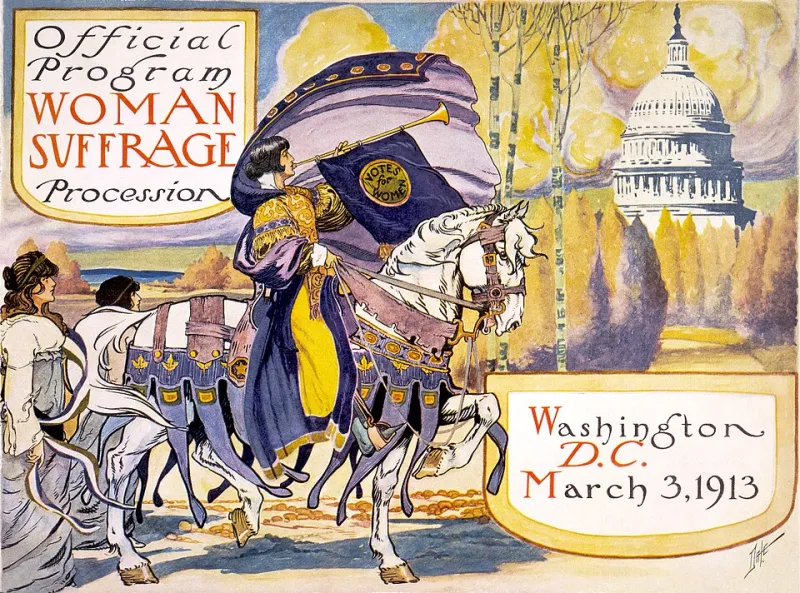
Photo: Benjamin Moran Dale (1889–1951), for the National American Women's Suffrage Association, Public domain, via Wikimedia Commons
Printed event programs occupy a practical middle ground in 2026. They are not the main notice, and they are not a sentimental souvenir. At JPPD Entertainment Network, the printed program works best as a member resource that happens to be on paper. It carries the schedule, the names, the thanks, and the next step. Designed with care, it travels home in a coat pocket and does a second shift on the kitchen counter or bulletin board.
Why Paper Still Earns a Place at the Table
Digital notices move quickly. JPPD should keep using them for reminders, changes, and RSVPs. A printed program does a different job. It gives a room a shared reference point. It lets a first-time attendee follow the evening without checking a phone. It puts local sponsor thanks in front of every reader, not only those who scroll a feed. It gives member shout-outs a physical place. For older members, caregivers, and anyone who finds a screen distracting, paper can be the more accessible option.
The case is not that paper is superior. The case is that paper is complementary. A program that is planned as a keepsake also tends to be planned more clearly. The format forces choices: what belongs on the page, what can wait, and what the reader should do next. That discipline improves the event itself.
Design for the Second Reading
A JPPD program should be useful on the night and legible a week later. The strongest printed programs tend to include four elements. First, a schedule at a glance, with start times, room names, and clear breaks. Second, member shout-outs that recognize volunteers, hosts, and participants by name. Third, local sponsor thanks, written in plain language rather than logo-only blocks. Fourth, a one-page resource list with the JPPD contact line, website, upcoming dates, and a simple way to volunteer or RSVP.
The design should avoid crowding. A single sheet folded in half can hold more than organizers expect. Use a clear hierarchy: event name, date, location, schedule, people, sponsors, resources. Keep sentences short. Put the most important contact information in the same place every time. If the program includes a QR code, print the destination address in words beside it. Never make the code the only path to information.
A Low-Cost Production Checklist
Paper programs do not require a large budget. They require a sequence. JPPD organizers can use the following checklist as a starting point.
- Choose a format early: one letter-size sheet folded to four panels, or a single two-sided sheet for shorter events. Confirm the final page count before writing.
- Set a print budget that includes a 10 percent overrun for handouts, replacements, and the archive.
- Use one consistent type family and no more than two weights. Black text plus one accent color is enough for most community events.
- Build a master file with margins that survive office printing. Test one copy before approving a full run.
- Recruit a proofreader who did not write the copy. Check names, times, room numbers, and the resource list.
- Ask a local print shop for a quote on standard paper. Compare it with in-house printing and volunteer assembly.
- Assemble programs in advance and store them flat. Keep a small stack at the welcome table and a reserve in the event kit.
- Save the final PDF and the source file in the JPPD member resources archive so the next organizer does not start from zero.
The cheapest program is not always the one with the lowest printing bill. A program that is reprinted because of a wrong room number costs more than a careful proof. A program that is too cramped to read fails the accessibility test. Low cost should mean disciplined, not rushed.
Accessibility Is Part of the Keepsake
A keepsake is only useful if it can be read. JPPD programs should use large type for body text, with headings that are clearly larger than the schedule details. Plain language matters as much as font size. Write “Join the welcome table at 6:30 p.m.” rather than “Participant onboarding commences at 1830.” Use high contrast, left-aligned text, and generous line spacing. Avoid thin fonts, all-caps paragraphs, and text placed over photographs. A matte paper stock reduces glare under room lighting. If the program includes a map, label the entrances and accessible routes in words.
Organizers should also prepare a large-print digital version for members who request it. The printed program can note that the same information is available by contacting JPPD. That sentence is not decoration. It is an accessibility commitment.
Measuring What the Program Does After the Night
The value of a printed program is easy to assume and harder to observe. JPPD does not need a complicated study. It needs a quiet method. Give each event program a short code, such as P26, and print a line inviting readers to mention it when they call, RSVP, or volunteer. At the welcome table, ask new attendees how they heard about the event. After the event, keep a 60-day log of three signals: follow-up calls that mention the program, RSVPs that reference the code, and volunteer sign-ups that cite the printed resource list.
Compare events with and without a program, but do not overclaim. A program is one part of a larger evening. The goal is to see whether the printed piece is doing real work, not to prove that paper alone fills a room. If the log shows little activity, adjust the call to action, the placement, or the resource list. If it shows steady follow-up, keep the format and refine the details.
A Small Artifact, a Longer Thread
JPPD event nights are built on attention. A printed program is a way of returning that attention to members in a form they can hold. It does not need to be expensive, glossy, or long. It needs to be accurate, readable, and connected to what happens next. When a program is designed for the second reading, it becomes more than a handout. It becomes a small record of the community that gathered, and a practical invitation to come back.